


Short answer: Kinesiologist vs physiotherapist comes down to diagnosis and treatment versus exercise. A physiotherapist assesses, diagnoses and treats injuries. A kinesiologist uses exercise to rebuild strength and movement, often after physio or alongside it. A personal trainer coaches general fitness. If you have a new or painful injury, see a physio first.
I’m Nathaniel Ernst, a Professional Kinesiologist (PKin) with the Alberta Kinesiology Association, and I run NATEFIT in southeast Calgary. Our studio has a kinesiologist and personal trainers under one roof, so I get this question every week. The most common mix-up I see is that people think kinesiologists and trainers only make you fitter or faster. They don’t realize we also help with injury rehab and preventive care.
In this guide:
- Kinesiologist vs physiotherapist vs personal trainer at a glance
- What does a physiotherapist do?
- What does a kinesiologist do?
- What does a personal trainer do?
- Kinesiologist vs physiotherapist: training and regulation in Alberta
- Kinesiologist vs physiotherapist: who should you see first?
- Kinesiologist vs physiotherapist: when to see a physio first
- Kinesiologist vs physiotherapist vs personal trainer: cost and insurance
- How a kinesiologist, physiotherapist and trainer work together
- Frequently asked questions
- Book an assessment
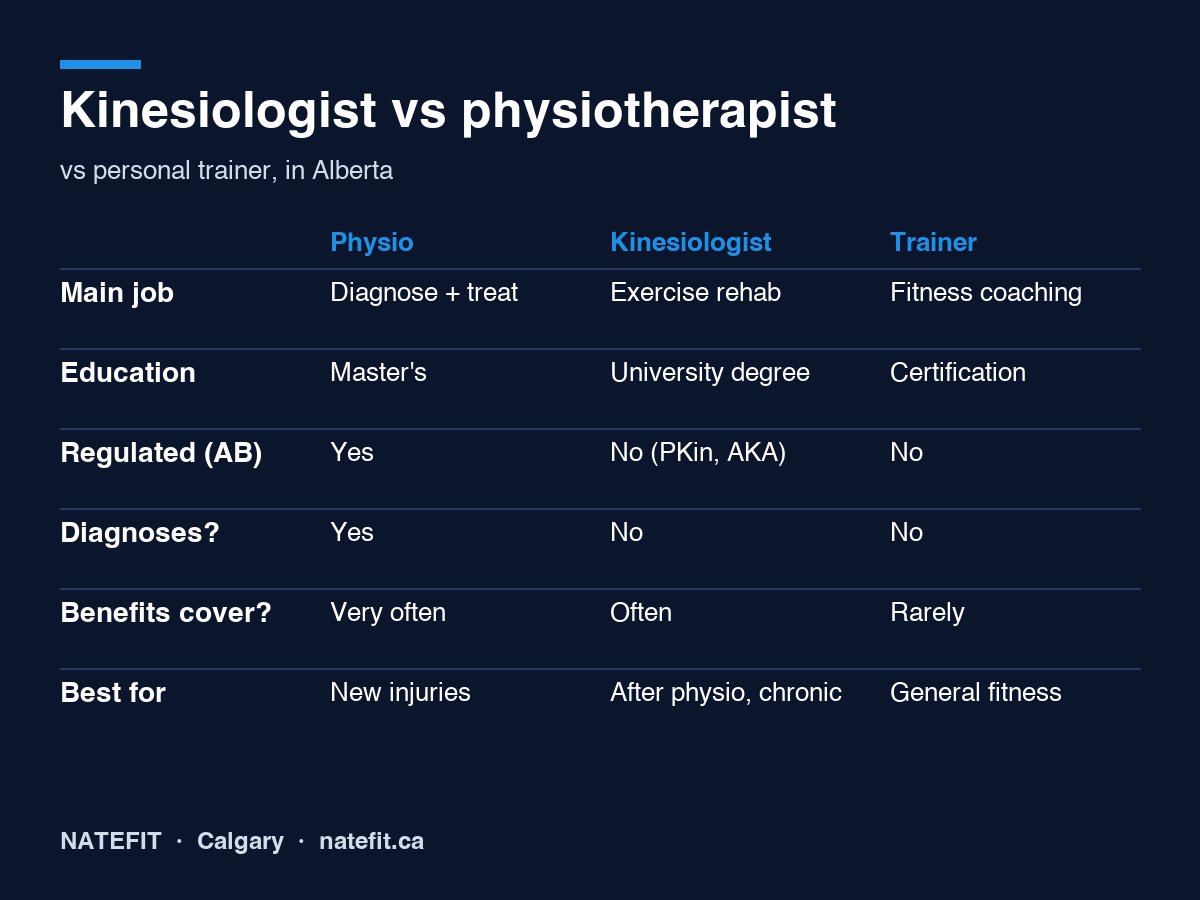
Kinesiologist vs physiotherapist vs personal trainer at a glance
| Physiotherapist | Kinesiologist | Personal trainer | |
|---|---|---|---|
| Main job | Assess, diagnose and treat injuries | Use exercise to rebuild strength, movement and health | Coach workouts for fitness goals |
| Education | Master’s degree in physiotherapy | University degree in kinesiology or exercise science | Fitness certification (weeks to months) |
| Regulated in Alberta? | Yes, College of Physiotherapists of Alberta | No; voluntary designation (PKin) through the AKA | No |
| Diagnoses injuries? | Yes | No | No |
| Hands-on treatment | Yes (manual therapy, modalities) | No; exercise-based | No |
| Covered by health benefits? | Very often | Often (see our guide) | Rarely; sometimes from a wellness account |
| Best for | New injuries, pain, post-surgery rehab | Finishing rehab, chronic pain, health conditions, strength | General fitness, strength, weight loss |
What does a physiotherapist do?
A physiotherapist assesses, diagnoses and treats problems that affect how you move, such as sprains, joint pain, back pain and recovery after surgery. In Alberta, physiotherapists are a regulated health profession: they must be registered with the College of Physiotherapists of Alberta to practise.
Treatment often combines hands-on work (manual therapy), modalities and a home exercise program. Visits are usually shorter and focus on the injured area.
What does a kinesiologist do?
A kinesiologist is an expert in human movement who uses exercise as the treatment. That’s the key kinesiologist vs physiotherapist difference: we don’t diagnose injuries. Instead, we assess how you move, review your health and injury history, then build and coach a program that rebuilds strength, mobility and confidence.
A kinesiologist session is usually a full hour of guided training. That makes it a good next step when physio has calmed an injury down but you’re not back to full strength yet, or when you have a long-term issue like chronic back pain, arthritis or a health condition that needs exercise done carefully.
How a kinesiology session differs from a training session: a training session is built around a fitness goal. A kinesiology session is built around your body’s limits. I spend more time looking for movement limitations and restrictions and checking for possible injuries, then build the plan to help that injury or problem area, rather than toward a performance goal.
What does a personal trainer do?
A personal trainer designs and coaches workouts for fitness goals: getting stronger, losing weight, training for an event or staying consistent. Good trainers hold a recognized certification such as CSEP, NSCA, ACSM, ACE or canfitpro, but the title isn’t regulated in Alberta, so anyone can call themselves a personal trainer.
Trainers aren’t trained to work with injuries or medical conditions the way a kinesiologist is. For healthy adults with fitness goals, a certified trainer is often the best value. If you’re weighing a kinesiologist vs physiotherapist but you aren’t injured, a trainer may be all you need.
Kinesiologist vs physiotherapist: training and regulation in Alberta
The biggest difference between a kinesiologist and a physiotherapist in Alberta is regulation.
- Physiotherapists complete a master’s-level physiotherapy program (for example at the University of Alberta), pass the national Physiotherapy Competency Exam, and must be registered with the College of Physiotherapists of Alberta, which sets their standards and handles complaints.
- Kinesiologists aren’t a regulated profession in Alberta yet. The Alberta Kinesiology Association grants the Professional Kinesiologist (PKin) designation to members with a kinesiology or exercise science degree, 300 hours of practical experience and professional liability insurance. Many insurers only reimburse kinesiology from a PKin.
- Personal trainers need only a certification, and even that is voluntary.
How to check: ask for the person’s designation and registration number. A physiotherapist should be on the College’s public register. A kinesiologist should hold PKin status with the AKA (mine is #2017-231).
Kinesiologist vs physiotherapist: who should you see first?
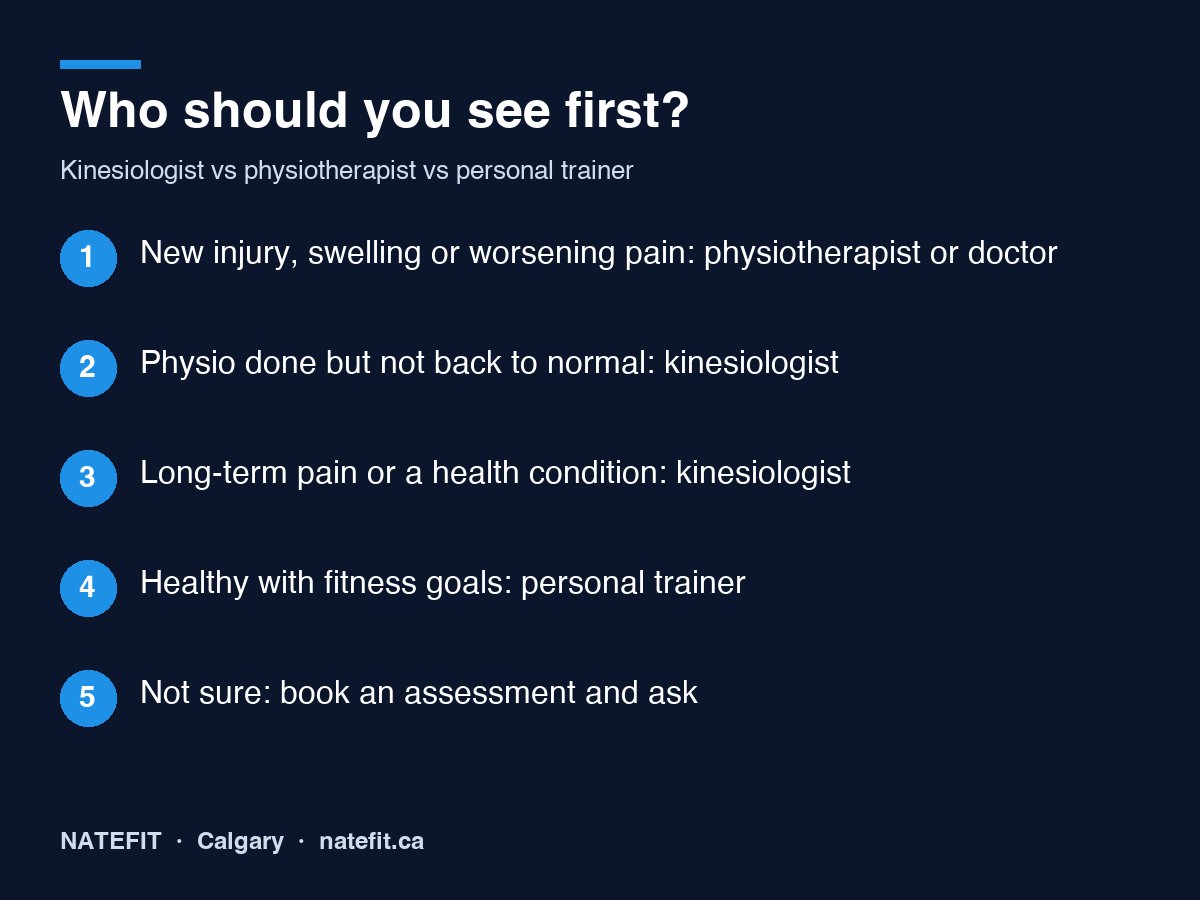
- New injury, sharp pain, swelling, or pain that’s getting worse? See a doctor or physiotherapist first for a diagnosis.
- Physio is finished (or winding down) but you’re not back to normal? A kinesiologist can bridge the gap back to full strength.
- Long-term pain, stiffness, arthritis or a health condition? A kinesiologist can build training around it, alongside your doctor or physio.
- Healthy and want to get fitter, stronger or lose weight? A certified personal trainer, or a kinesiologist if you’d like the extra expertise.
- Not sure? Book an assessment. If we think you need a physio first, we’ll tell you.
Kinesiologist vs physiotherapist: when to see a physio first
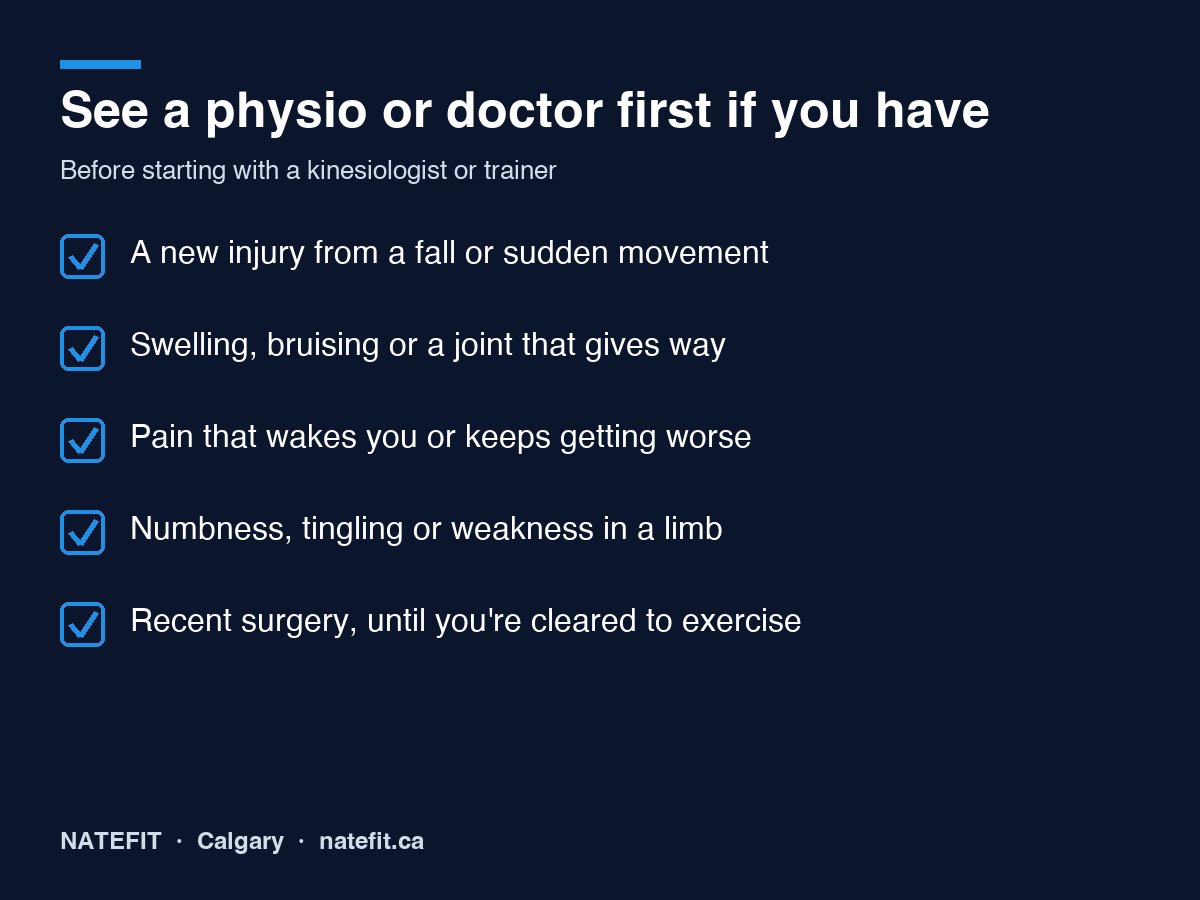
See a physiotherapist or doctor before starting with a kinesiologist if you have:
- A new injury from a fall, collision or sudden movement
- Swelling, bruising or a joint that gives way
- Pain that wakes you at night or keeps getting worse
- Numbness, tingling or weakness in an arm or leg
- Recent surgery, until your surgeon or physio clears you for exercise
When clients ask me about kinesiologist vs physiotherapist, my rule is simple: if we don’t know what the injury is, a physiotherapist diagnoses it first. Once we have a diagnosis, I build the kinesiology treatment plan from there.
Kinesiologist vs physiotherapist vs personal trainer: cost and insurance
When you compare a kinesiologist vs physiotherapist on cost, your benefits plan matters most.
- Physiotherapy isn’t covered by Alberta Health Care, although Alberta Health Services funds some outpatient physio for specific concerns. Most extended health plans include physio, often with a higher limit than kinesiology.
- Kinesiology is covered by many extended health plans when it’s delivered by an accredited kinesiologist. Our guide Is kinesiology covered by insurance in Alberta? explains how to check your plan and what your receipt needs.
- Personal training usually isn’t covered by extended health, but a lifestyle or wellness spending account often pays for it.
At NATEFIT, a kinesiology session with me is $120 plus GST. Sessions with our certified personal trainers start at $100 plus GST, and semi-private training is $40 a session.
How a kinesiologist, physiotherapist and trainer work together
It isn’t always kinesiologist vs physiotherapist. The best results often come from using all three at the right time. A typical path:
- Physiotherapist: diagnoses the injury and calms it down.
- Kinesiologist: rebuilds strength and movement once you’re cleared, and keeps an eye on how your body responds.
- Personal trainer or semi-private group: keeps you training long term at a lower cost.
A real example: a client came to us with a shoulder injury. We sent them to a physiotherapist for a diagnosis, and the physio sent them for imaging. Once the imaging confirmed what was going on, we started their rehab plan with kinesiology sessions. When the shoulder was stronger and moving without pain, they moved to personal training and are now training hard for a performance goal.
Frequently asked questions
Should I see a physiotherapist or a kinesiologist?
See a physiotherapist for a new, painful or worsening injury, because they can diagnose it. See a kinesiologist when you need exercise to rebuild strength, manage a long-term condition, or finish recovering after physio.
Can a kinesiologist do physiotherapy?
No. Physiotherapy is a regulated profession in Alberta, and only registered physiotherapists can provide it. A kinesiologist uses exercise and doesn’t diagnose injuries or provide hands-on treatment.
Why would you see a kinesiologist?
To rebuild strength and movement after an injury, train safely with chronic pain or a health condition, or get expert, one-on-one exercise coaching that many health plans cover.
Is a kinesiologist better than a personal trainer?
Not better, just different. A kinesiologist has a university degree and is trained to work around injuries and health conditions. A certified personal trainer is a great fit for healthy adults with fitness goals.
Do I need a referral to see a kinesiologist vs a physiotherapist?
In Alberta you can book either one directly without a referral. Some insurance plans ask for a doctor’s note before they reimburse, so check your plan.
Is kinesiology or physiotherapy better for lower back pain?
For new or severe back pain, start with a doctor or physiotherapist. For ongoing back pain once serious causes are ruled out, a kinesiologist can build a strength program that supports your back.
Book an assessment
Still weighing a kinesiologist vs physiotherapist? Read more about kinesiology sessions with Nathaniel, or book a 90-minute consultation. We’ll assess how you move, tell you honestly whether you should see a physio first, and build a plan if you’re ready to train.
About the author
Nathaniel Ernst is a Professional Kinesiologist with the Alberta Kinesiology Association and the founder of NATEFIT in southeast Calgary. He holds a B.Sc. in Exercise Science from the University of Lethbridge and has coached clients for more than ten years.
This article is general information, not medical advice. If you have a new injury or worrying symptoms, see a doctor or physiotherapist.